Foundation repair in Bowling Green for houses built on clay over cave-riddled limestone.
Bowling Green Foundation Works repairs settling foundations, stair-step cracks, bowing basement walls, sagging crawl spaces and wet basements across Bowling Green, Warren County and the towns from Glasgow and Cave City to Franklin, Russellville and Morgantown. Every job begins with a free inspection: a level across your floors, a gauge on your cracks and a look at where the water goes. You get the cause, the repair and the price in writing before anything is dug.
Insured crews · Written plan before digging · City permits and Kentucky 811 locates handled
- CLAYRed clay subsoil, the first few feetSwells in a wet spring, shrinks in a dry August. That push and pull opens stair-step cracks and sticks doors.
- SEAMSLimestone with clay-filled cracksRain carries soil down the seams into openings in the rock, and the slab above loses support a little at a time.
- VOIDCave passages belowAlong Russellville Road and Nashville Road the city geologist puts them at 15 to 20 feet or less. North of the river, nearer 150.
- STORMStormwater sent undergroundThe city drains runoff into the caves through drainage wells. After 10-plus inches in four days in April 2025, it answered at least 18 new sinkholes.
The free inspection ends with a written plan, so you know which of these you are dealing with before anyone picks up a shovel.
Foundation, crawl space and basement repair from one company that lives on this ground
Foundation repair
Settling corners, cracked brick and block, and footings that lost their soil, traced to a cause before any method is chosen.
Foundation repair →Crack repair
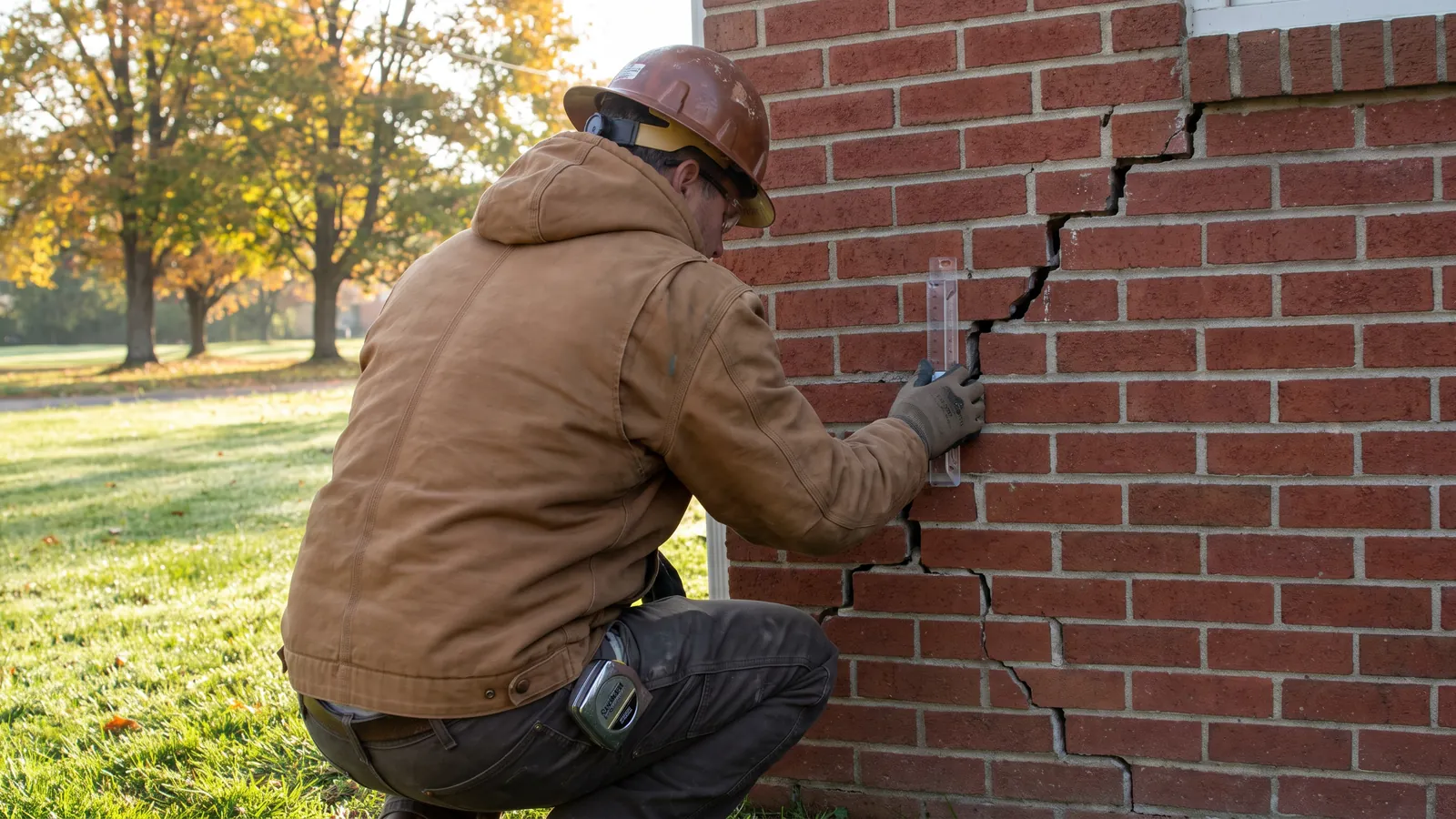
Stair-step, horizontal and vertical cracks read for what they say, then sealed, reinforced or left to a gauge.
Cracks →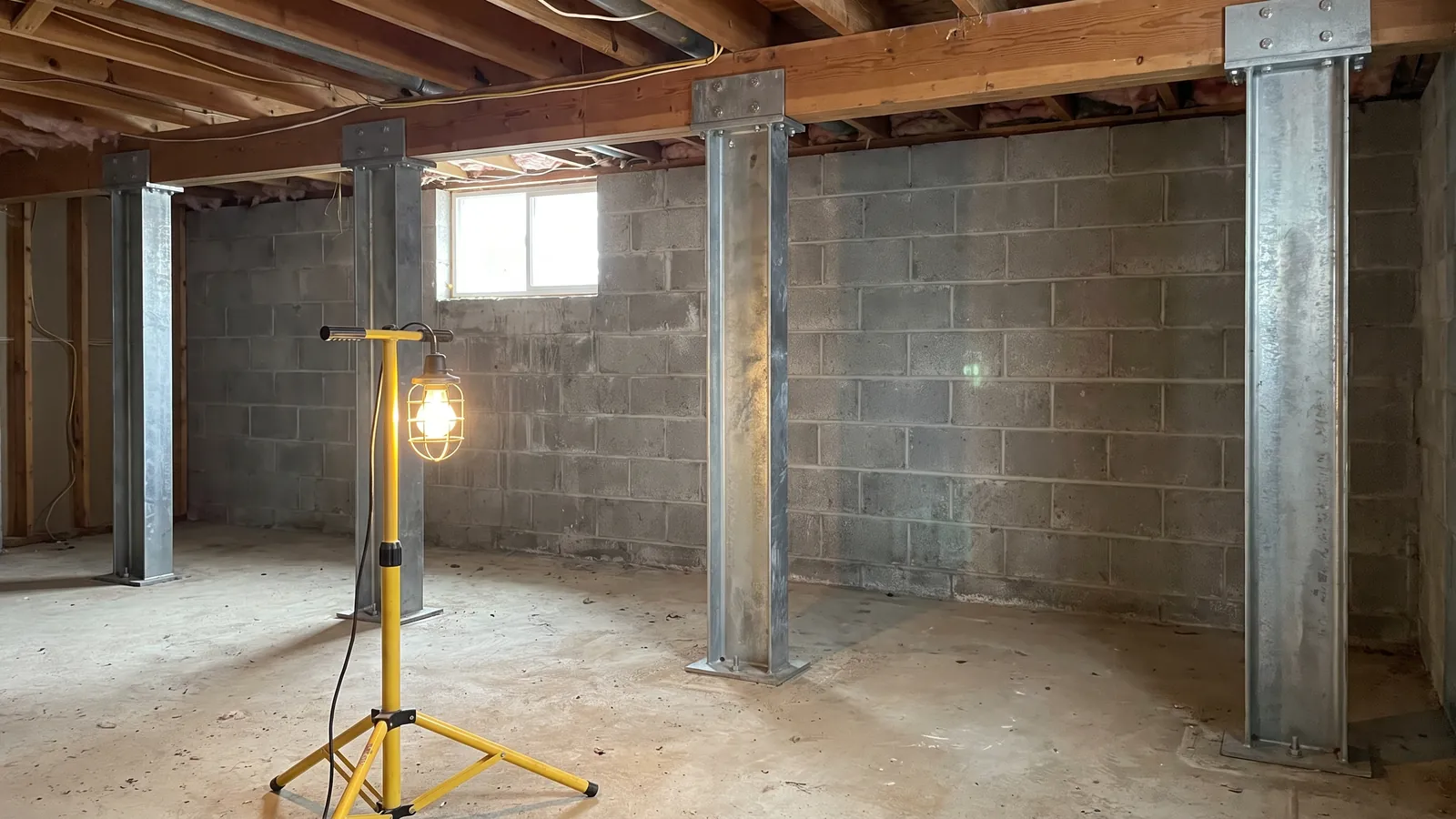
Bowing basement walls
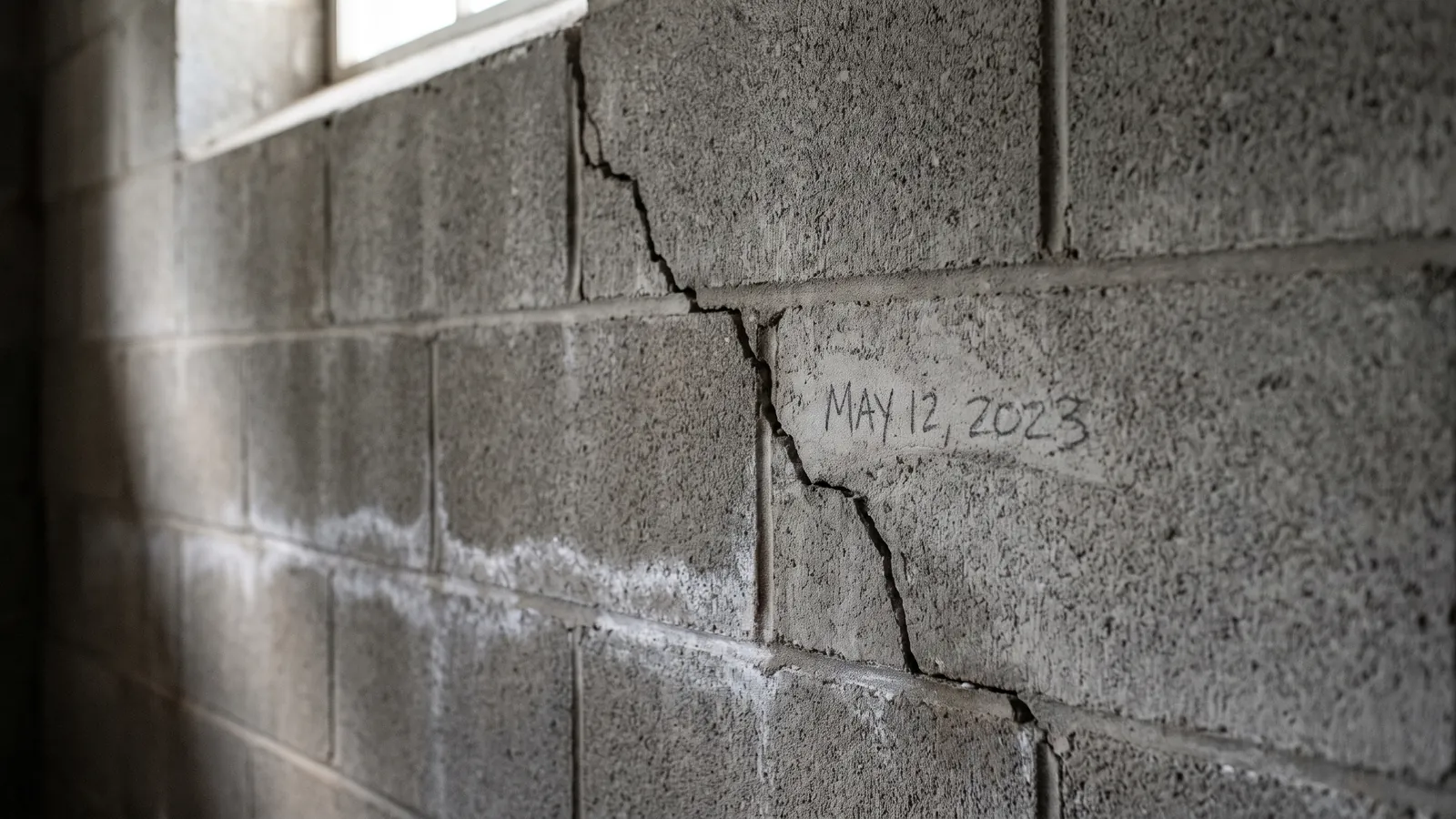
Block walls pushed in by wet clay, held with wall anchors, steel beams or carbon fiber.
Wall repair →Push piers
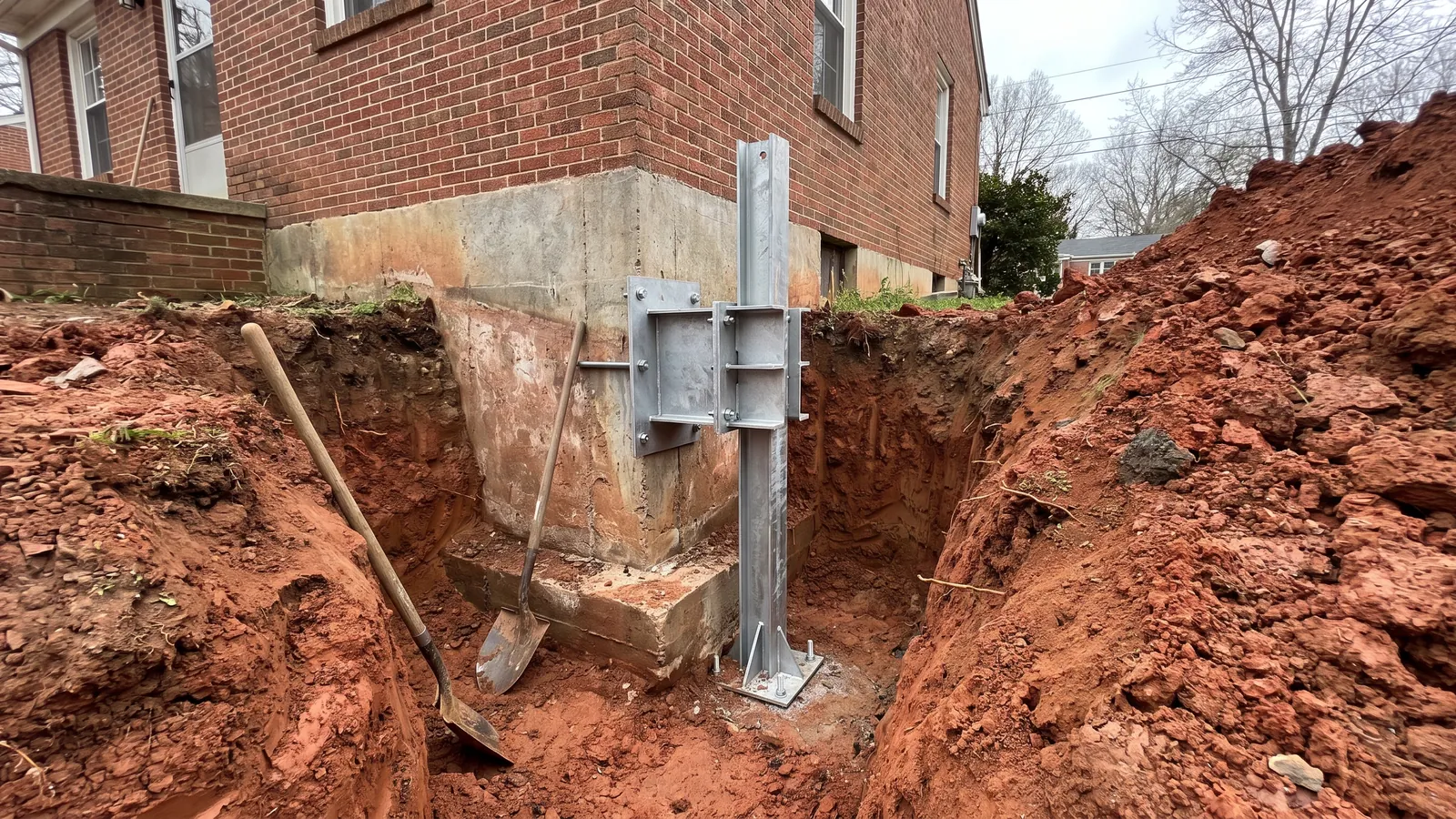
Steel piers driven past soft soil to rock or firm bearing, with every depth written down.
Push piers →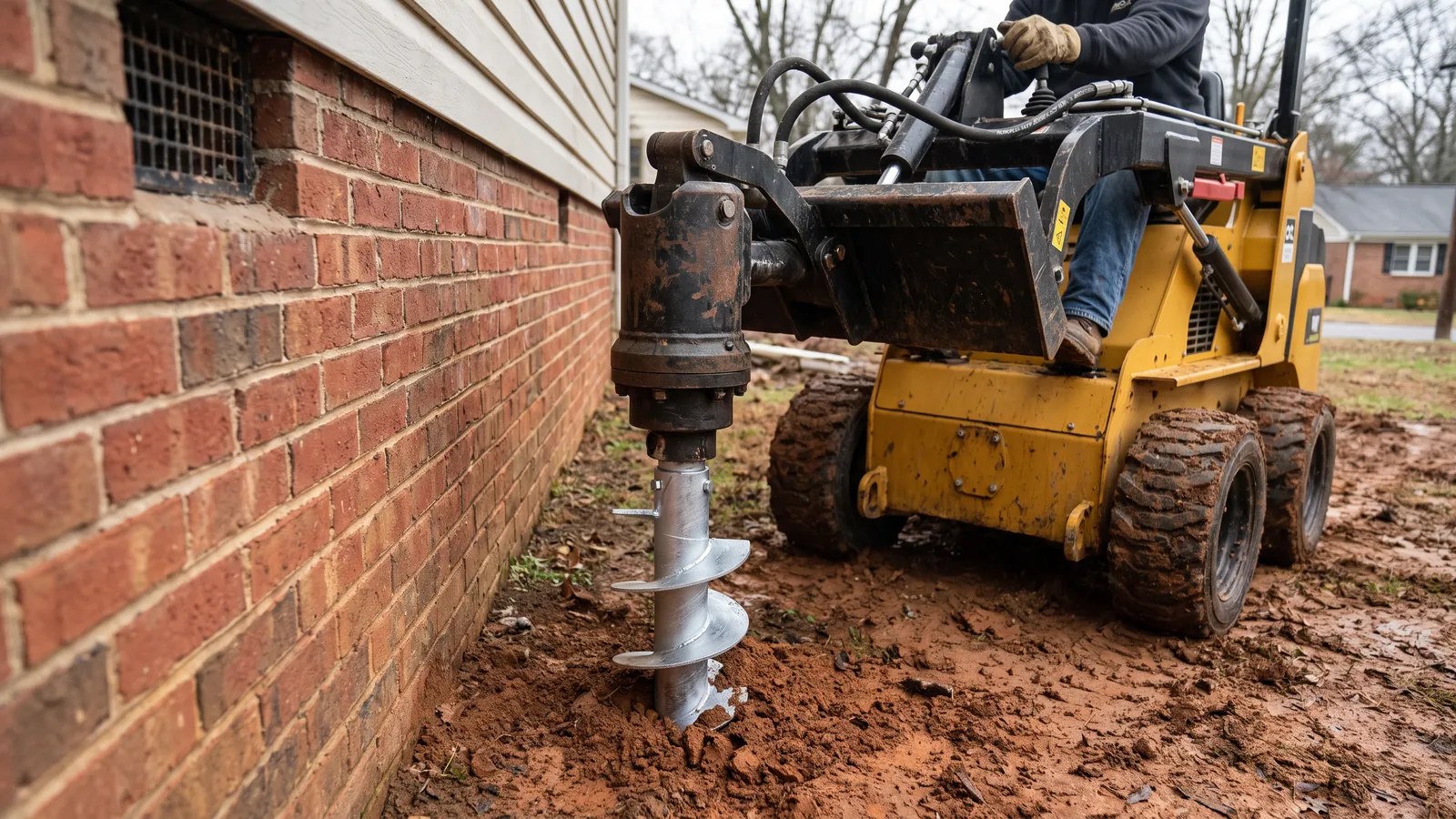
Helical piers
Screw-in piers for porches, additions and light loads, installed to a measured torque.
Helical piers →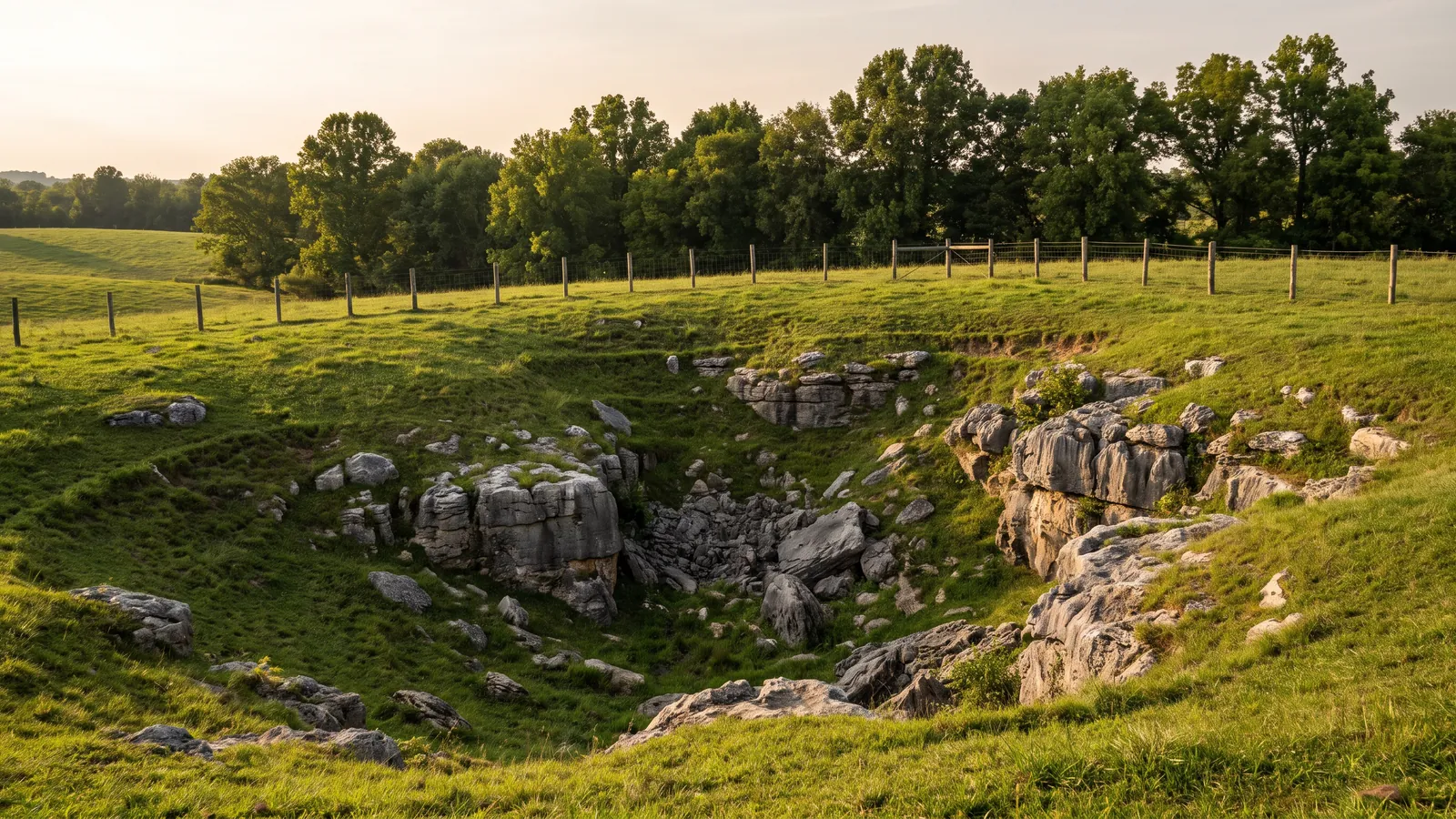
Sinkhole and karst repair
Houses losing support over voids in the limestone, carried down to the rock that is still there.
Karst repair →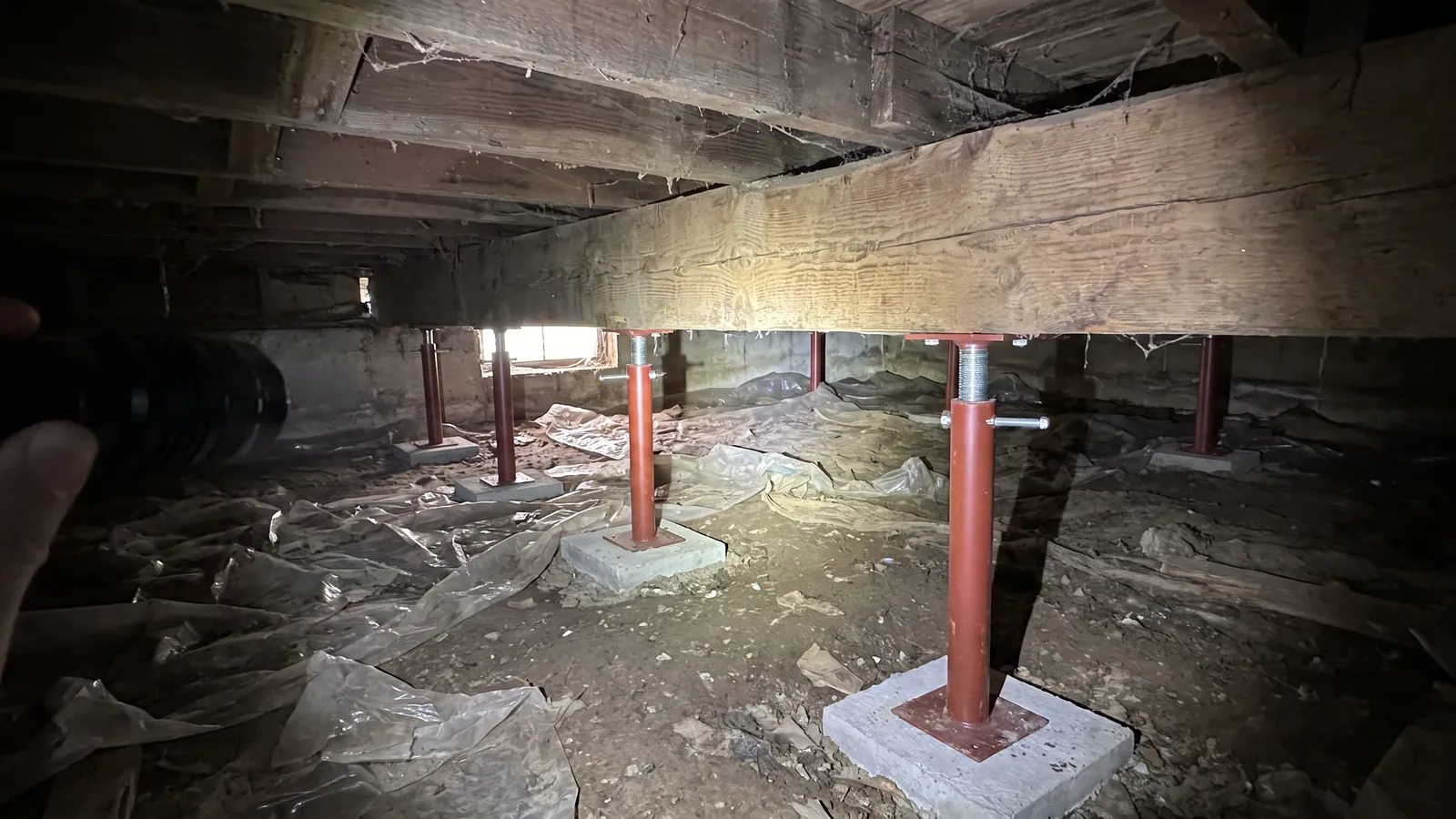
Crawl space repair
Sagging girders, crushed shims and soft sills under older houses, replaced and supported.
Crawl spaces →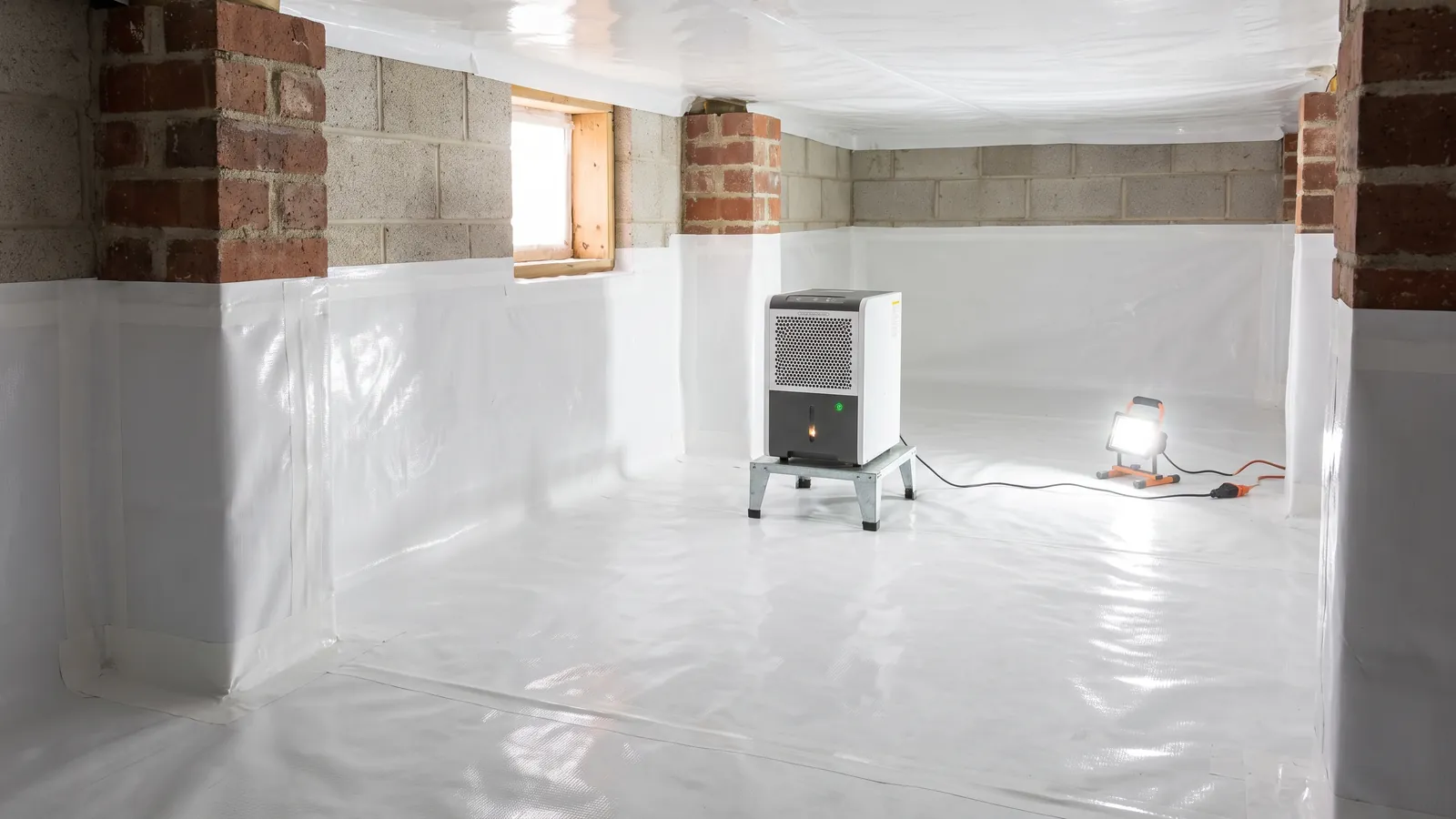
Crawl space encapsulation
A sealed liner, closed vents and a dehumidifier for crawl spaces that stay damp all summer.
Encapsulation →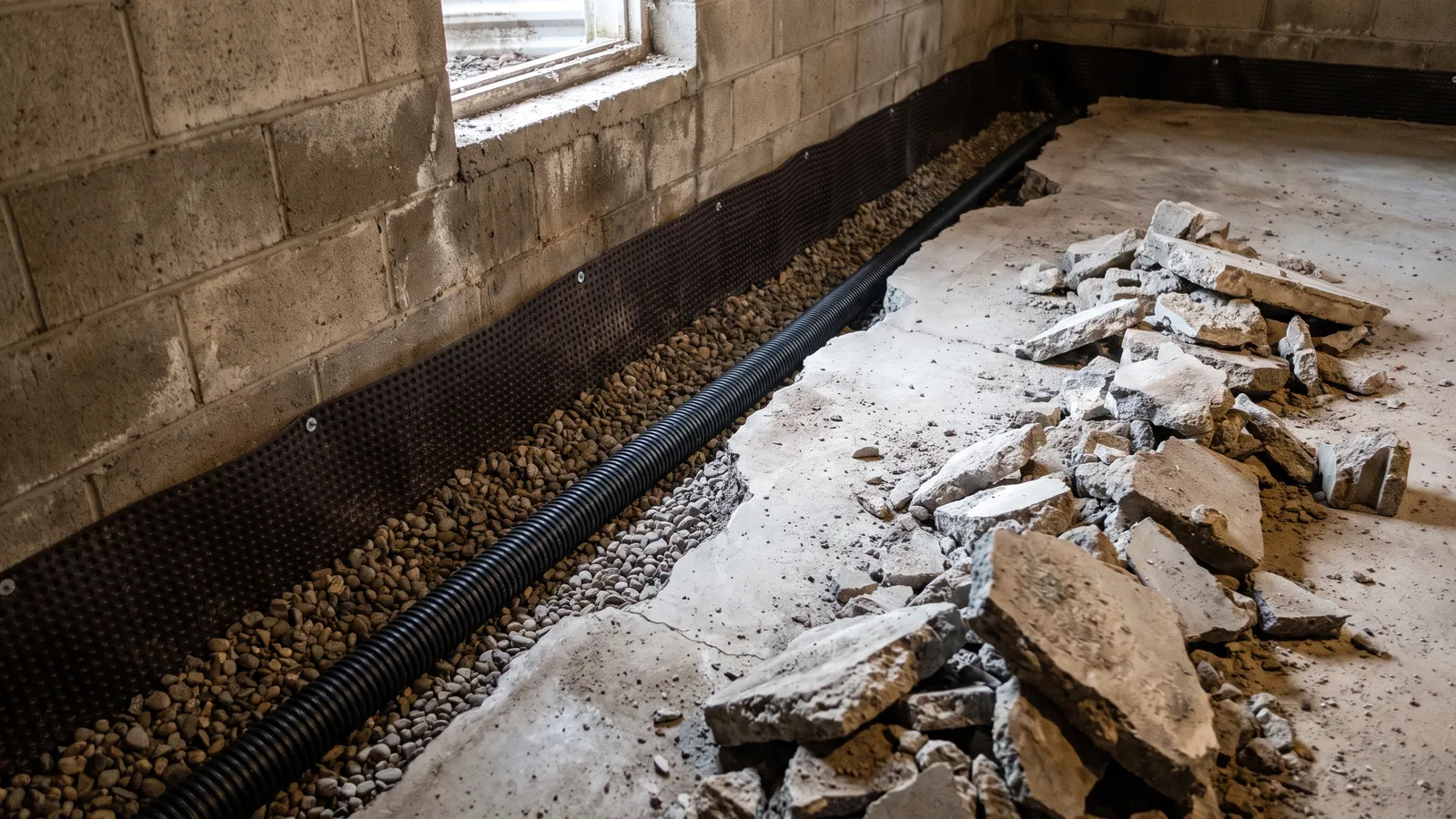
Basement waterproofing
Interior drains, membranes and sealed cracks for basements that take water every spring.
Waterproofing →Four numbers that explain what happens under houses here
Bowling Green is a growing city on old ground. The houses are getting older, the rain is heavy, and the rock underneath has been dissolving since long before anyone poured a footing.
Three rules worth knowing before anyone digs beside your house
A permit for structural repair
Bowling Green's Building Division requires a permit to construct, enlarge, alter, repair or demolish a structure, and it says alterations that change a building's structural form need one. Its advice to homeowners is blunt: never let work begin unless the permit is posted on site. Inside city limits, ours goes up before the first shovel.
No state licence to look up
Kentucky does not issue a statewide licence for general or foundation contractors; it licenses electricians, plumbers and HVAC contractors. That leaves insurance as the thing to verify. Ask any company, ours included, for a certificate showing general liability and workers' compensation coverage.
A locate before the trench
Kentucky law, KRS 367.4911, requires notice to the one-call center at least two and no more than ten full working days before excavation. Piers, drains and downspout lines all mean digging, so the locate request goes in when you approve the plan, not on the morning of the job.
What the ground here does to houses
Stair-step cracks
Block walls and brick veneer split along the mortar joints in a staircase pattern when one corner moves more than the rest. Clay that swells and dries is the usual driver.
Crack repair →Bowing basement walls
Saturated clay leans on a block wall all spring. A long horizontal crack partway up, or a wall tipping in at the top, means it has started to give.
Wall repair →Sagging crawl spaces
Humid summers and damp ground soften sills and girders in older crawl-space houses. Floors bounce, slope toward the middle and smell musty.
Crawl space repair →Settlement over voids
When soil washes down into the limestone, a corner, a slab or a porch can drop slowly or all at once. The fix depends on how deep sound rock sits.
Karst repair →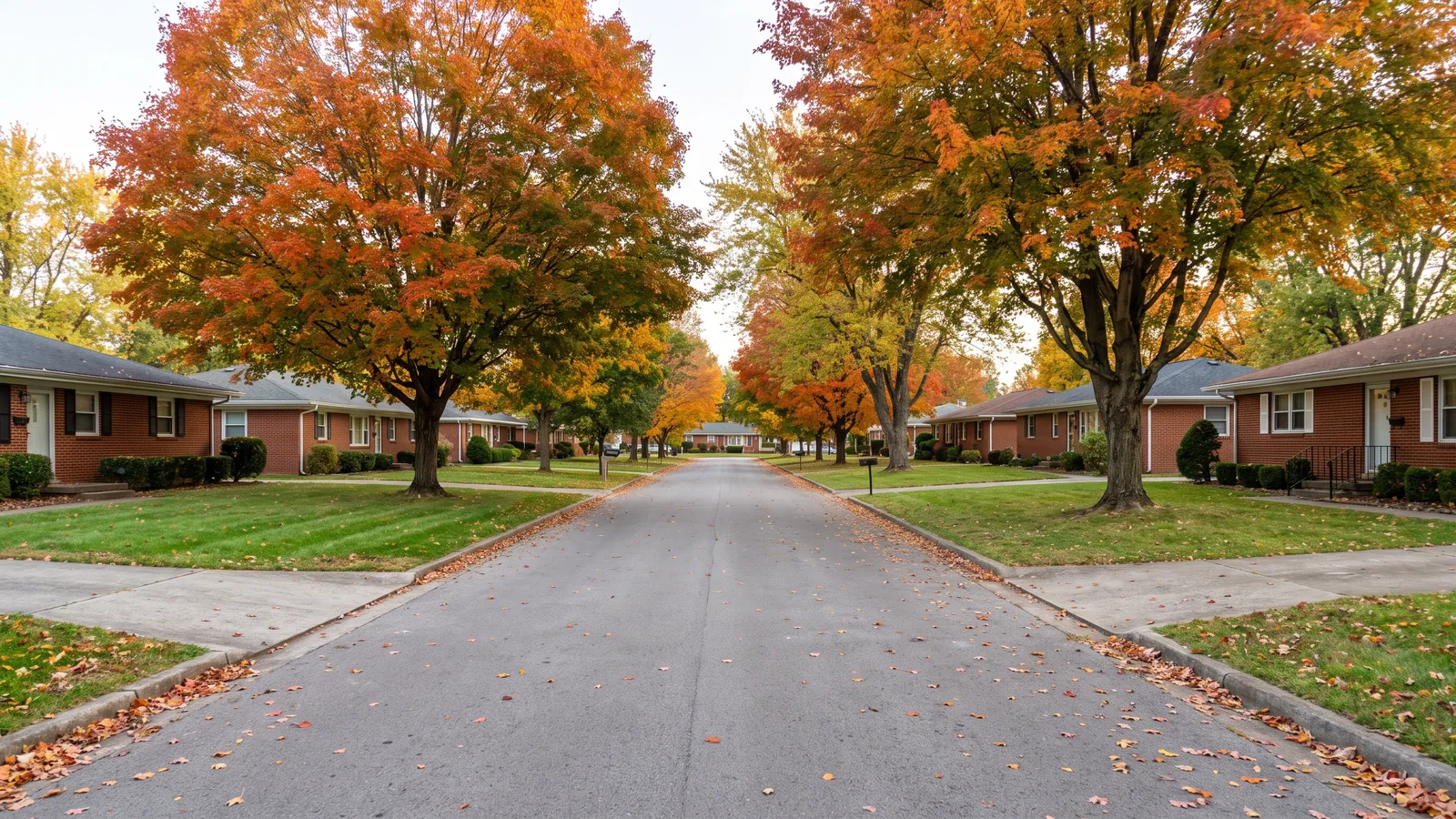
The city has America's best-known sinkhole. The quiet ones do more harm to houses.
At 5:44 on the morning of February 12, 2014, motion detectors went off at the National Corvette Museum. The floor of the Skydome had dropped into a cave roughly 30 feet below, leaving a hole about 40 feet wide and 60 feet long and taking eight Corvettes with it. The museum rebuilt the room and reopened it in July 2015. It is a good story, and it makes the point plainly: Bowling Green sits on a karst plain, where the rock dissolves and caves carry the water away underground.
What happens under houses is usually slower. Soft residual clay settles under a heavy wall. Water running down a seam pulls a little soil into the rock with every storm. A downspout emptying beside the same footing for twenty years does the rest. The Kentucky Geological Survey's notes for Warren County describe exactly this: clay that can settle gradually under heavy structures, and water carrying supporting soil down into openings in the limestone.
The housing adds its own pattern. Bowling Green's median home dates to 1991, more than a third were built before 1980 and a fifth went up after 2010. Block basements and crawl spaces from the 1960s and 70s have had decades to move, the slabs and additions of the boom years are old enough now for settling to show, and the streets rebuilt after the December 2021 tornado sit on the same old ground.
That is the case for a company based here rather than one driving up I-65 for the day: knowing which side of town has caves near the surface, how quickly the clay moves after a wet May, and which repair holds on this rock.
Where we work →From the first call to the last load of gravel
You call or send the form
Tell us what you have noticed and when it started. The phone is picked up at any hour, and someone calls back to set up the inspection.
We measure the house
Floor elevations, crack widths, wall plumb, the crawl space or basement, the gutters and the grade, with photos of anything that matters.
You get a written plan
The cause, the repair, every line item with its price, the permit if one applies, and what we would leave alone. Take your time deciding.
The crew installs it
After the 811 locate and the permit, the crew builds the repair, records pier depths or anchor settings, backfills, cleans up and walks you through it.
Bowling Green first, then the karst towns around it
Inside the city we work on both sides of the Barren River: the older blocks around downtown and Western Kentucky University, the corridors out Russellville Road and Nashville Road where caves run shallow, the Scottsville Road and US 231 side toward Alvaton, and the subdivisions north of the river where the rock sits deeper.
Beyond the city limits we drive to Smiths Grove, Oakland, Alvaton and Woodburn in Warren County; Glasgow and Cave City in Barren County; Scottsville in Allen County; Franklin in Simpson County; Russellville and Auburn in Logan County; Brownsville in Edmonson County; and Morgantown in Butler County.
Every town we serve →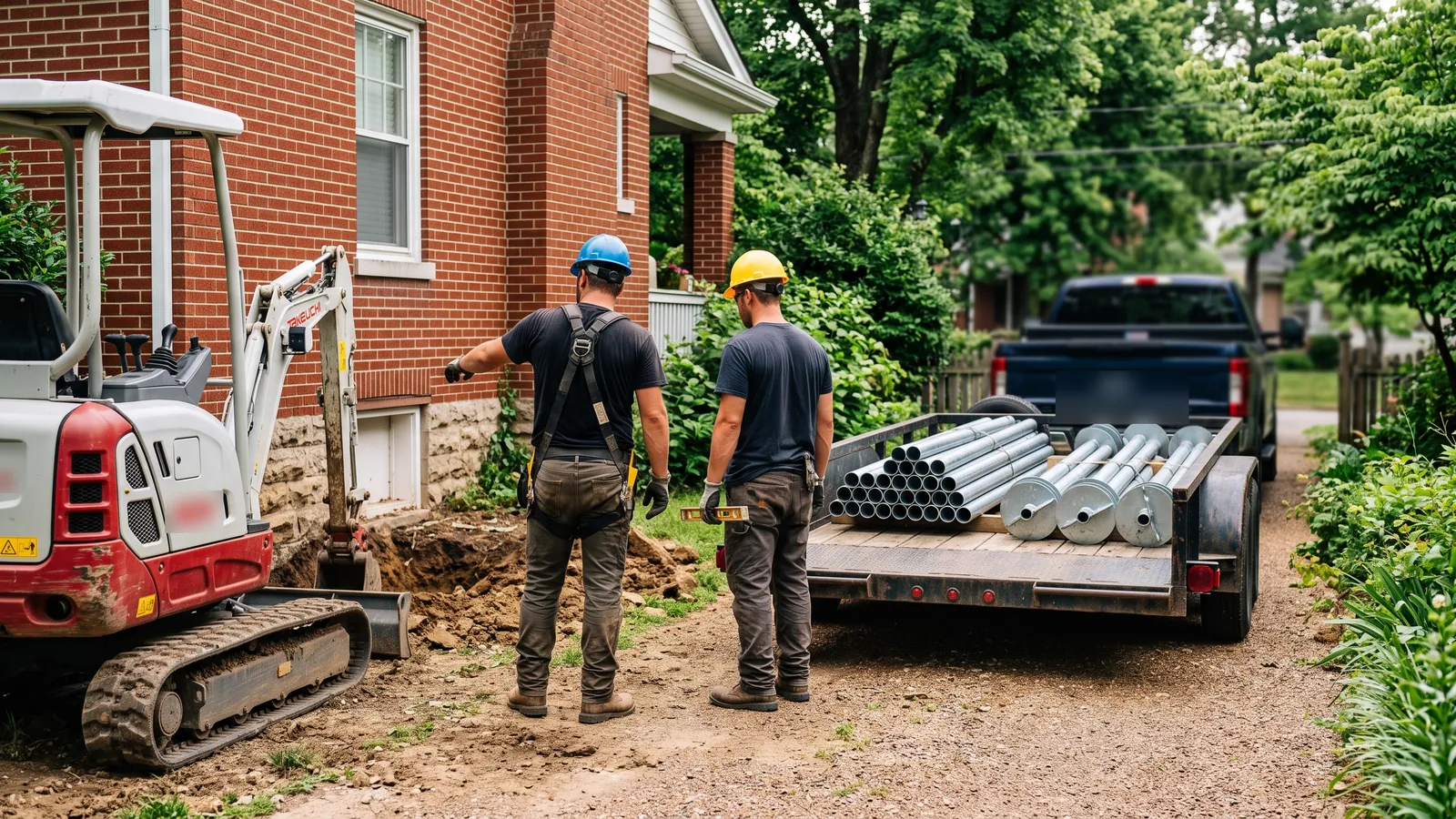
What Bowling Green homeowners ask first
How much does foundation repair cost in Bowling Green?
It depends on what failed. National cost guides put a typical foundation repair between about $2,200 and $8,200, with steel push piers around $1,500 each, helical piers around $3,000 each installed, crack injection $200 to $1,000 a crack, and a bowing basement wall commonly $2,000 to $7,500. On karst, the depth to solid rock under each pier moves the total more than anything else. Your number comes in writing after the free inspection. The cost guide breaks it down.
Is the inspection really free?
Yes. A specialist measures the floors and the cracks, looks in the crawl space or basement, walks the drainage outside and leaves you a written plan with prices. There is no charge and no obligation. If you need a stamped engineer's report for a sale or a dispute, we say so, and you can hire an engineer directly.
Do I need a permit for foundation repair in Bowling Green?
Inside city limits the Building Division requires a permit to construct, alter or repair a structure, and structural foundation work falls under that rule. Its advice to homeowners is never to let work begin unless the permit is posted on site. We confirm what your job needs and pull it. Outside the city we check with the building office that covers the address. See permits, licensing and 811.
Will homeowners insurance pay for the repair?
Usually not for settling or sinkhole damage. Standard policies typically exclude earth movement, sinkholes included, unless an endorsement was added. A sudden covered event such as a burst pipe can be treated differently, so read the policy and call your agent. More in our insurance guide.
A sinkhole opened near my house. Is that dangerous?
It can be. Keep people, pets and vehicles back from the edge and don't fill it with loose dirt or debris. If it is in a street or on city land, Bowling Green Public Works takes reports at 270-393-3628. If it is close to your foundation, call us and we will check whether the house is losing support and what reaching solid rock beneath it would take.
Can someone come out at night or on a weekend?
The phone is picked up at every hour, and crews are out Monday through Saturday. A basement taking on water or a wall that moved overnight gets the first open slot, so tell whoever answers what changed and when.