Basement walls pushed in by Kentucky clay, held before they go further
A block wall that has started to bow will not straighten itself out. The good news is that most can be stopped, and some pulled back, without rebuilding the wall.
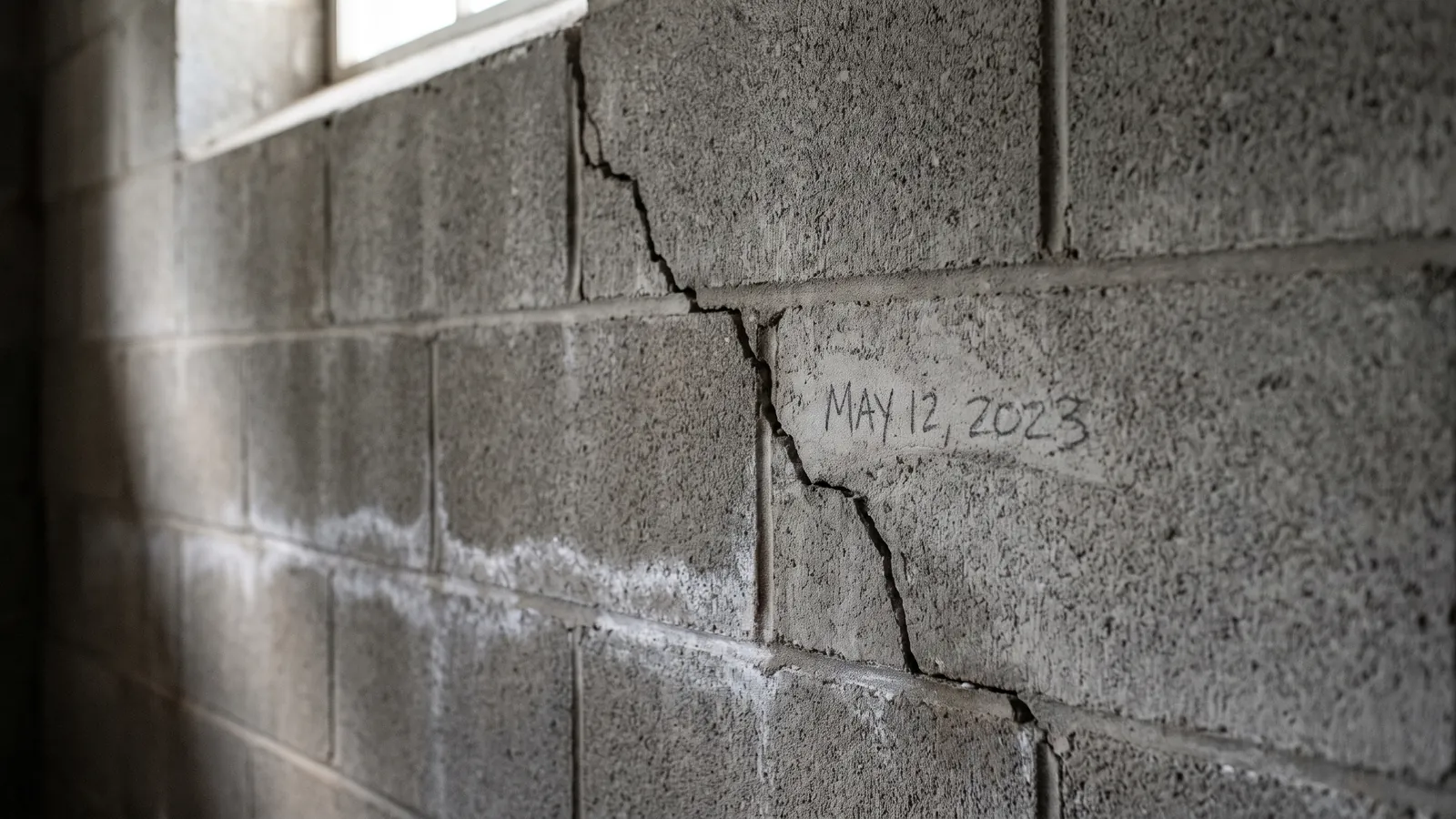
Basement walls around here fail from the outside in. The red clay against the wall soaks up spring rain, grows heavier, swells and presses on the block, and a hard freeze adds to the load in a cold winter. A concrete block wall is strong when you push down on it and weak when you push it sideways. After enough seasons the mortar cracks along a horizontal joint, usually a few feet below the top, and the wall begins to bend inward at that line. Sometimes the whole wall tips in at the top instead, or slides inward at the bottom.
The signs are easy to spot once you know them: a long horizontal crack, stair-step cracks at the ends of the wall, blocks that no longer line up when you sight along them, a wall that leans in when you hold a level against it, and often water coming through the cracks. We measure how far the wall is out of plumb at several points and how wide the cracks are, because the amount of movement decides the repair.
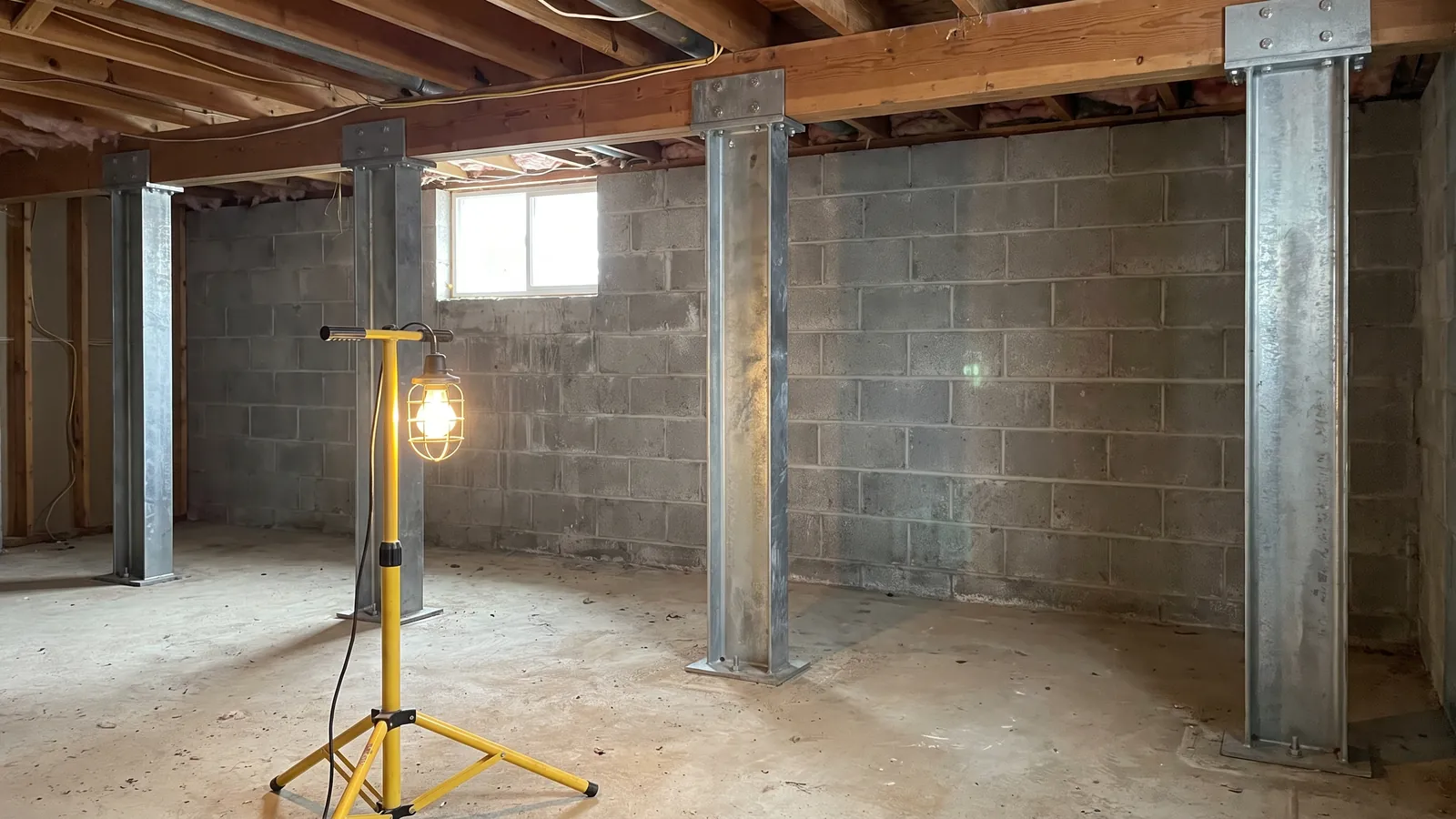
There are three main fixes. Wall anchors run steel rods through the wall into the yard, where a plate is buried in stable soil; they are tightened to hold the wall and, over time, can draw it back. They need open ground on that side, about every five feet along the wall. Steel beams stand against the inside face, fastened to the floor and the framing above, at roughly four-foot spacing, and work where anchors cannot go, such as beside a driveway or a lot line. Carbon fiber straps are bonded to walls that have bowed only a little and need to be stopped rather than moved. A wall that has gone too far, or is close to collapse, has to be dug out and rebuilt, and we will say so.
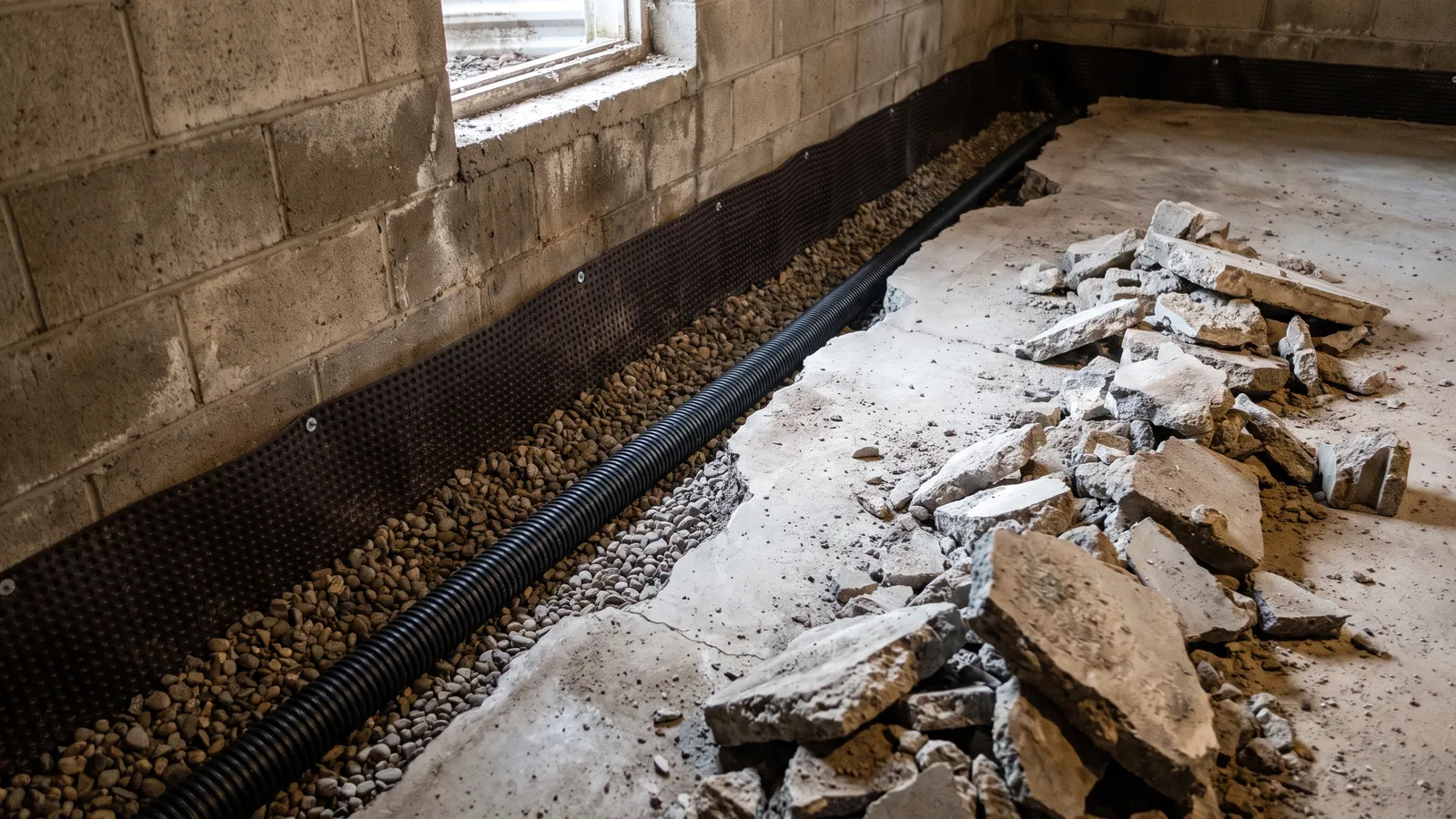
Whatever holds the wall, the water that pushed it is still out there. We look at the gutters, the downspouts, the slope of the yard and the drainage at the footing, because the same wet clay will keep pressing until the water has somewhere else to go. See yard drainage and waterproofing.
What the job covers
Movement measured at several points
Out-of-plumb readings and crack widths along the wall, recorded so you can see later that the repair is holding.
Wall anchors
Steel rods to buried plates in the yard about every five feet, tightened to hold the wall and adjusted over time.
Steel beams
Vertical beams inside, fixed to the floor and the framing, about every four feet where the yard is not available.
Carbon fiber
Thin straps for walls with modest movement, a good choice for finished or soon-to-be-finished basements.
Drainage addressed
Downspouts, grading and footing drainage checked so wet clay stops loading the wall.
Rebuild when needed
Walls past saving are excavated and rebuilt rather than braced, and you will hear that plainly.
What bowing basement walls costs around Bowling Green
| Item | Budget range | What moves it |
|---|---|---|
| Bowing wall repair, typical wall | $2,000 – $7,500 | Today's Homeowner national range |
| All methods, per linear foot | $75 – $400 | Varies with method and access |
| Wall anchors | $80 – $150 per ft | About one every 5 ft |
| Steel beams or straps | $85 – $275 per ft | About one every 4 ft |
| Carbon fiber reinforcement | $4,000 – $12,000 | Per project, Fixr national range |
| Excavate and rebuild | Quoted after inspection | Only for walls past bracing |
These ranges come from national cost guides and are here to help you plan. Your own number is written up after the free inspection, with each pier, anchor, post or foot of drain on its own line, and nothing is dug until you approve it.
Anchors, beams or carbon fiber
| Method | What it needs | Pulls the wall back? | Suits |
|---|---|---|---|
| Wall anchors | Open yard on that side, one about every 5 ft | Gradually, with adjustment | Most block walls with room outside |
| Steel beams | Floor and framing to fasten to, one about every 4 ft | No, it holds | Walls beside driveways, patios or lot lines |
| Carbon fiber | A wall with little movement so far | No, it holds | Finished basements and early bowing |
| Rebuild | Excavation along the outside | Replaces the wall | Walls that have moved too far |
What this work looks like
Bowing basement walls: what homeowners ask
Can a bowed wall be straightened?
Partly, in many cases. Wall anchors can be tightened over several seasons to draw a wall back as the soil allows. Beams and carbon fiber are meant to stop movement, not reverse it. Forcing a wall back quickly cracks it.
Which is better, anchors or beams?
Anchors leave the basement clear and can recover some movement, but they need open yard on that side. Beams go anywhere inside, including against a driveway or property line. The lot usually makes the choice.
How fast can a bowing wall fail?
Most move slowly, over years. A wall that changed noticeably in one season, blocks sliding at the bottom, or a horizontal crack opening quickly is more urgent. Keep people and stored things away from it and call.
Will waterproofing fix a bowing wall?
No. Waterproofing handles water that gets in; it does nothing to hold a wall that is bending. Stabilize the wall first, then deal with the water.
Does wall repair need a permit?
Reinforcing a basement wall is structural work. Inside Bowling Green city limits it goes through the Building Division, and anchors mean digging in the yard, so a Kentucky 811 locate goes in first.
Can I finish the basement afterward?
Yes. Carbon fiber and anchor plates sit nearly flat to the wall, and beams stand a few inches out and can be framed around. Sort out any water first.