Helical piers for the parts of a house too light to push against
A helical pier is turned into the ground like a giant auger and stops when it reaches the torque that proves its capacity. It does not need the weight of the house to go in, which makes it the tool for porches, additions and new work.
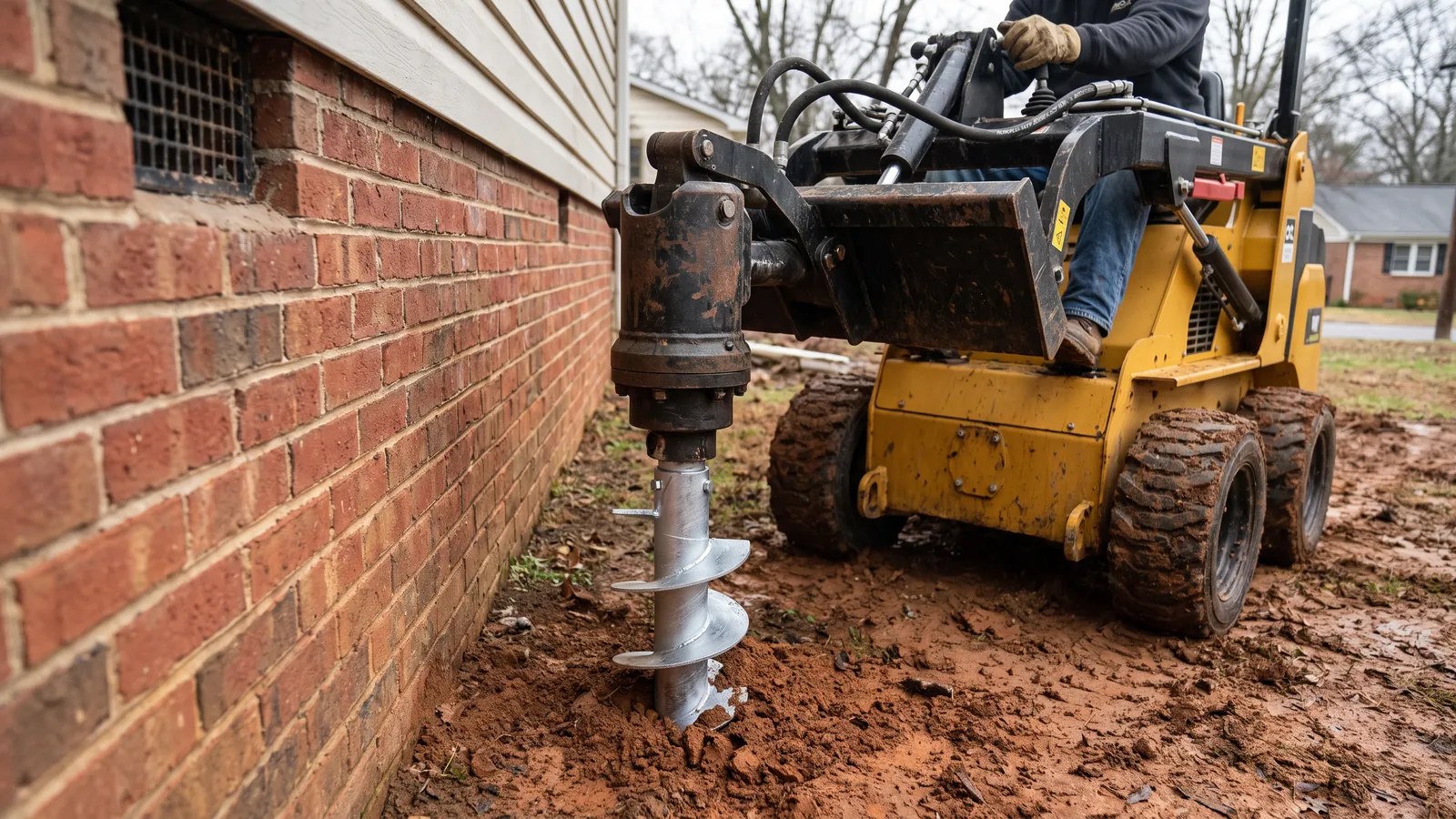
A helical pier is a steel shaft with one or more round plates, the helices, welded near the tip. A hydraulic drive head turns it into the soil, and as it turns the plates pull it downward. The crew watches the torque it takes to keep it turning; torque climbs as the plates reach denser ground, and there is a well-established link between installation torque and the load a pier will carry. When the pier reaches the torque the design calls for, it is cut to height and fitted with a bracket under an existing footing or a cap under a new beam.
Because installing one does not depend on pushing against the house, helical piers fit wherever the structure above is light: a front porch pulling away from the house, a sunroom or garage addition sitting on a shallow footing, a stoop or a deck, an interior slab with little weight on it. They also suit new construction, since they can be set and tested before any concrete is poured, and they go into stiff clay that would be miserable to hand-dig.
On karst there is a limit worth understanding. The plates need soil to bite into, and they cannot screw through limestone. Where rock sits close to the surface, a helical may stop on rock or on a ledge before reaching its target torque, and that is something we read during installation, not afterward. In those spots we may switch to a push pier or adjust the layout. Every pier's depth and final torque go on the log you receive.
As with any structural repair, a helical pier job inside Bowling Green city limits is permitted through the Building Division, and digging waits for a Kentucky 811 locate. Most houses that need helicals need somewhere between five and ten.
What the job covers
Torque proves capacity
Installation torque watched and recorded on every pier, so capacity is checked in the ground, not assumed.
No house weight needed
Suited to porches, additions, stoops, decks and slab interiors that are too light for push piers.
New work and old
Brackets under existing footings, or caps under new beams and footings before the concrete goes in.
Rock checked as we go
Where limestone is shallow, refusal is read during installation and the method changed if a pier stops short.
Small footprint
A compact drive head and a modest hole at each pier, often reachable where an excavator is not.
Pier log included
Location, depth and final torque for every helical, handed over with the job paperwork.
What helical piers costs around Bowling Green
| Item | Budget range | What moves it |
|---|---|---|
| Helical pier, each, installed | about $3,000 | Today's Homeowner national figure |
| Typical count per house | 5 – 10 piers | Depends on the area being carried |
| Helical pier project | $15,000 – $30,000 | Today's Homeowner national range |
| Porch or stoop support | Quoted per job | Fewer piers than a wall |
| Permit | Its own line | Where the city or county requires one |
These ranges come from national cost guides and are here to help you plan. Your own number is written up after the free inspection, with each pier, anchor, post or foot of drain on its own line, and nothing is dug until you approve it.
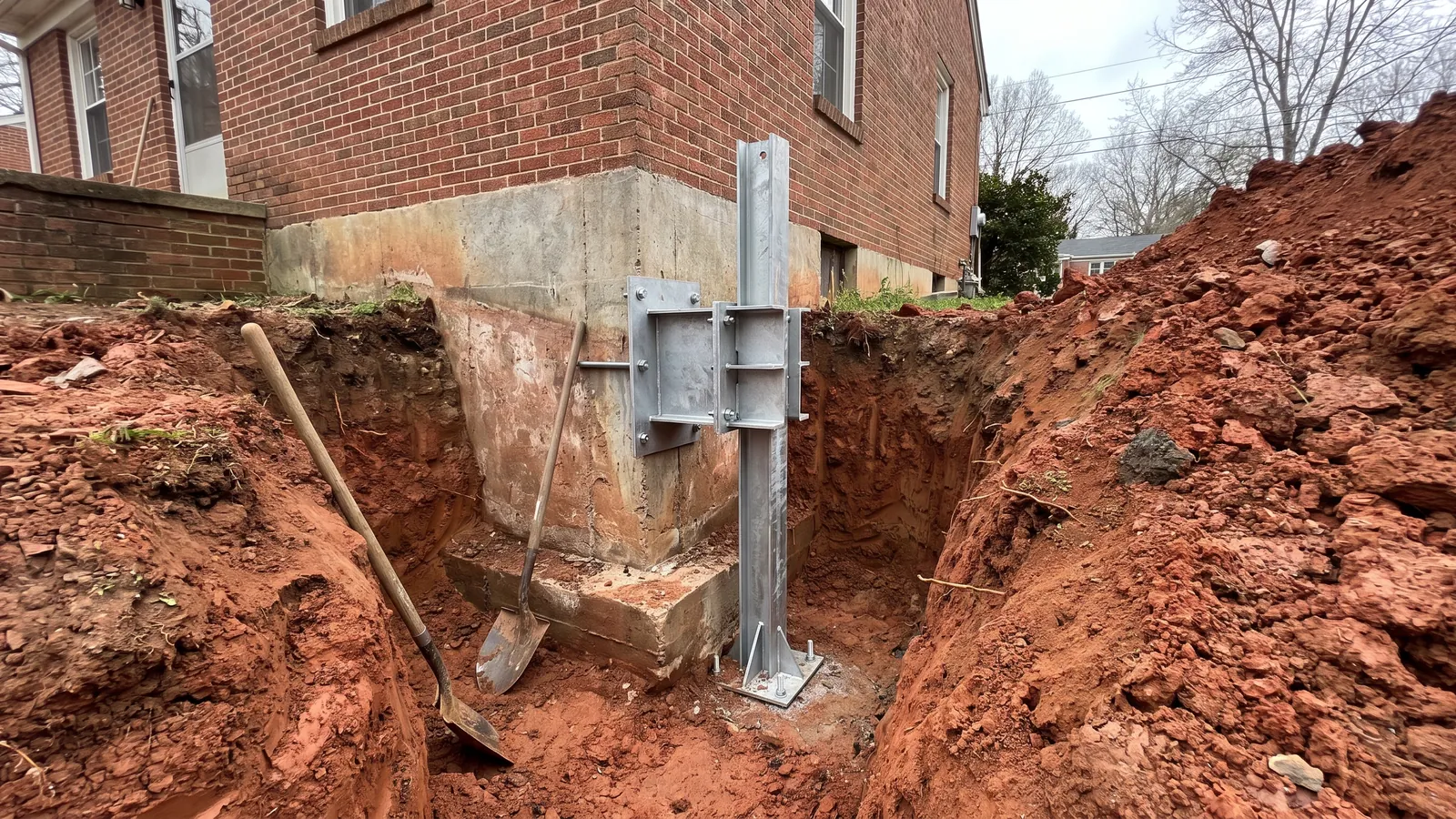
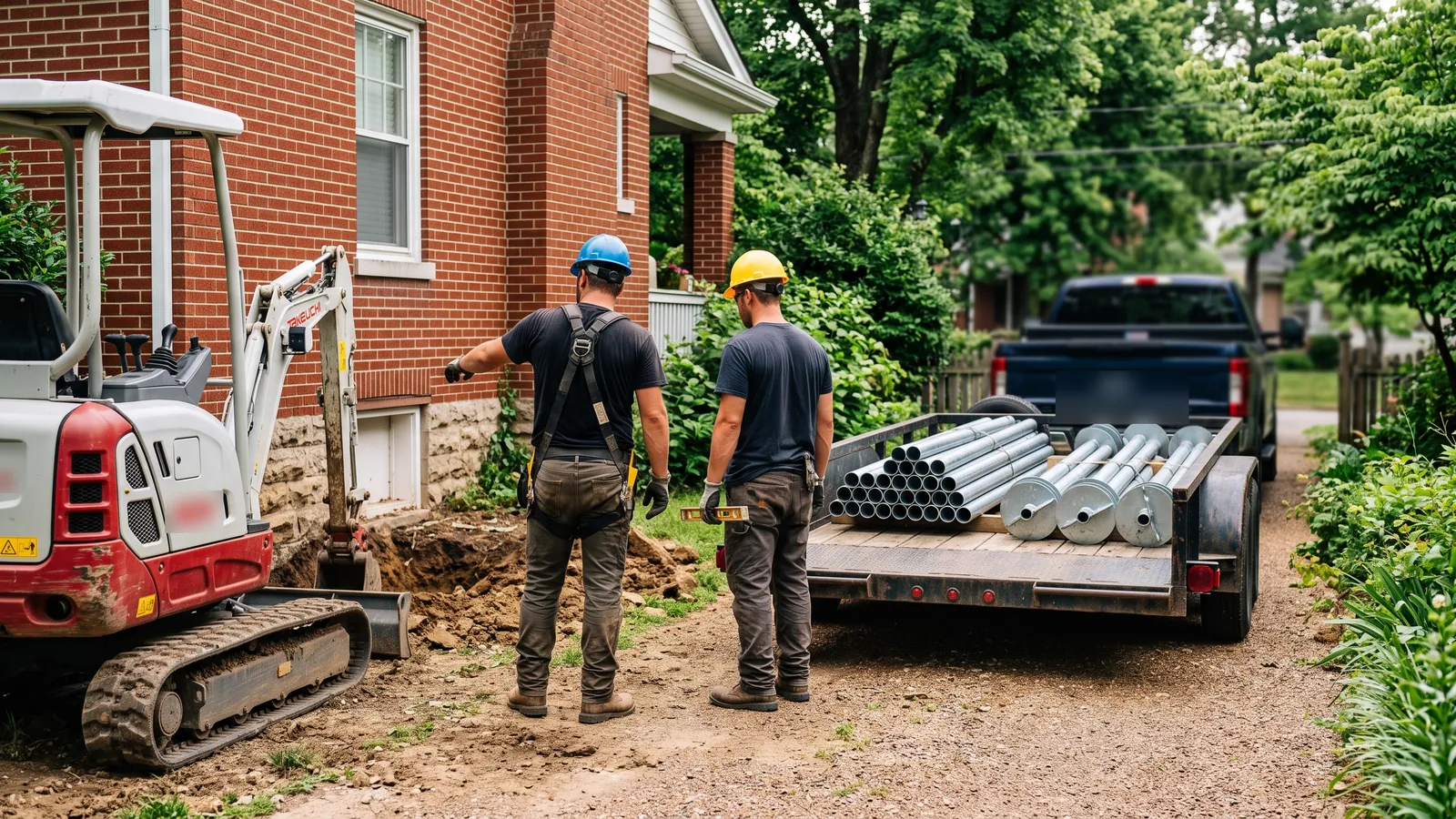
What this work looks like
Helical piers: what homeowners ask
Helical or push pier: how do you choose?
Weight and ground. Push piers need a heavy structure to push against and handle our deep, uneven rock well. Helicals carry lighter loads, suit new work and need soil for the plates to bite. Plenty of jobs use both.
Will helical piers work over a sinkhole?
Not over an open one. They need soil to screw into, and a void is the opposite. For karst problems we look at reaching rock with push piers and, where needed, an engineer's plan. See sinkhole repair.
Can you fix a porch pulling away from the house?
Yes, it is one of the most common helical jobs. Porches often sit on shallow footings in fill soil, and a few helicals under the porch beam can stop it and sometimes lift it back.
Do helical piers rust?
They are coated steel set in the ground below the footing and designed for buried service. Soil conditions vary, so the coating is part of what gets specified.
How long does installation take?
Often one or two days for a typical set, once the permit and the 811 locate are in hand.
Can they go in before a new addition is built?
Yes, and that is a good time for it. The piers are installed and tested first, then the footing or beam is poured or set on top of them.