Foundation repair in Russellville, from the square to the farm roads
Russellville, the Logan County seat about 30 miles west of Bowling Green, took its name in 1798 and has been putting up buildings ever since. Old masonry and newer subdivisions each bring their own foundation trouble.
Russellville sits in the valley of Town Branch, a tributary of the Mud River that drains on to the Green. The town still has the square where, on March 20, 1868, a gang tied to Cole Younger, and possibly the James brothers, robbed the bank, a story now told in a mural and at the Tobacco and Heritage Festival. A town with that much history has a wide spread of houses, and the foundations under them were built by very different rules.
The oldest houses
Houses from the 1800s and early 1900s across this part of Kentucky often rest on shallow footings and piers of brick or stacked stone, over crawl spaces that were never meant to stay dry. Over the decades mortar softens, piers lean, and the floors above follow them down. In those homes the work usually starts underneath: failed piers replaced with adjustable steel supports, girders shimmed or reinforced, and ground moisture brought under control so the wood stops rotting.
Houses in the valley
Homes near a creek bottom deal with groundwater and softer soil more than homes up on a rise. A basement that leaks only after long rains, or a slab that cracks near the low side of the lot, tells us water is part of the story. We look at how the lot falls, where the downspouts empty and where the nearest drainage way runs before pricing any structural work.
Newer houses on the edges
Newer Russellville houses mostly come to us with cracks in brick veneer or drywall and a door that has started to rub. That can be ordinary settling or a corner that has dropped. A floor-level survey answers the question in about an hour.
How we help homeowners in Russellville
Work under the house
Leaning brick piers and failed shims replaced with adjustable steel posts on poured footings, set to a planned floor height.
Gentle on old masonry
Settling in historic brick is corrected slowly and in small steps, giving old mortar and plaster a chance to come along without fresh cracking.
Valley-lot drainage
Lots near Town Branch and other creek bottoms get a drainage plan before anything structural is decided.
Basement wall bracing
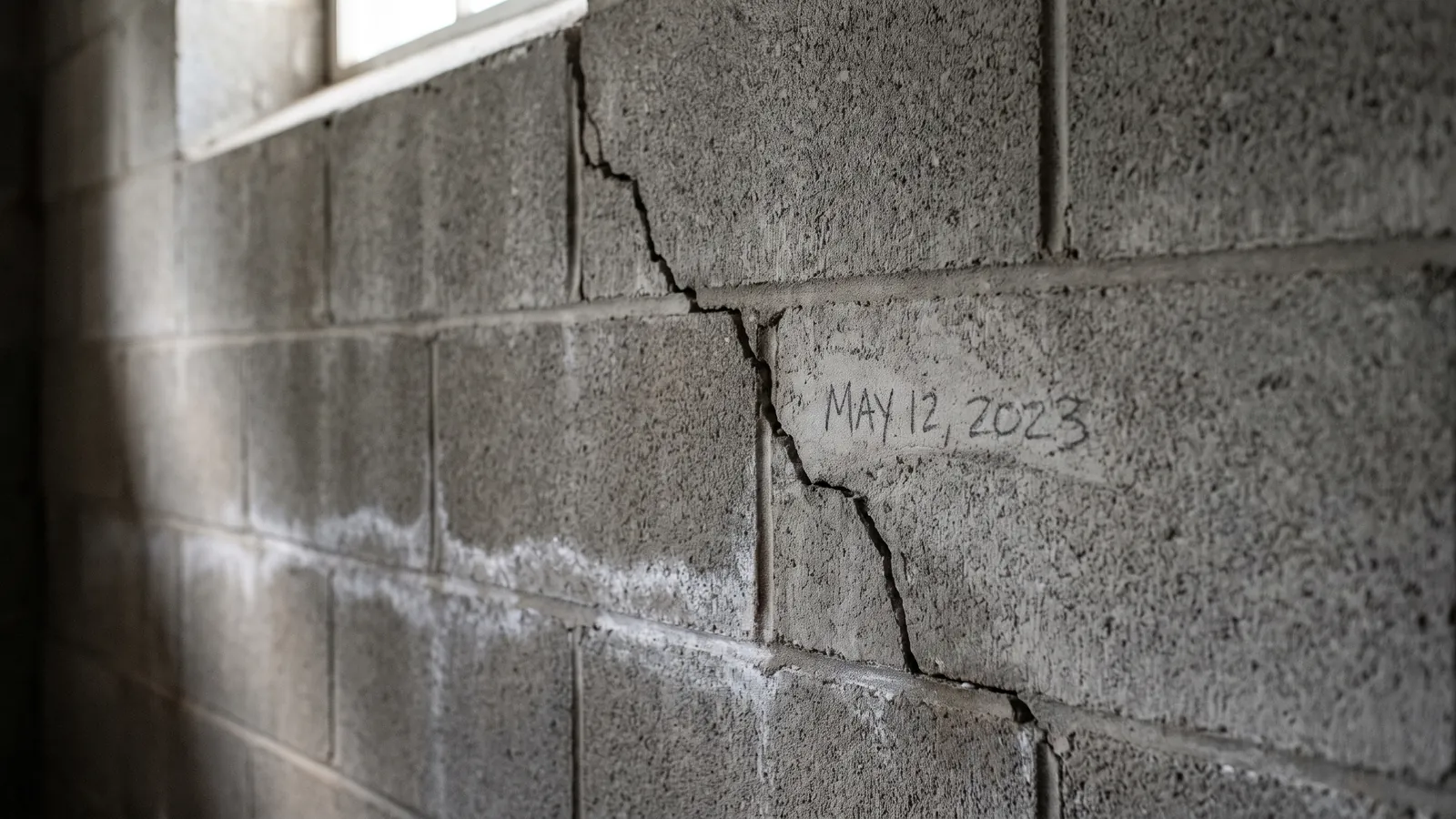
Bowing block walls stabilized with anchors, steel beams or carbon fiber chosen to suit the measured movement.
Floor-level survey
A full set of floor readings drawn up so you can see where the house is low and how much it would take to bring it back.
Written repair plan
Scope, method, number of piers or posts and the price in writing, with the permit and the utility locate listed as steps.
Roads and landmarks around Russellville
- The square in downtown Russellville
- Town Branch valley
- Low ground toward the Mud River
- Newer homes at the edges of town
- Rural Logan County
- The road east toward Auburn
Repairs we bring to Russellville
- Under the house: foundation repair, push piers, helical piers, house and floor leveling
- Walls, cracks and slabs: crack repair, bowing basement walls, slab foundations, sinkhole and karst repair
- Crawl spaces: crawl space repair, encapsulation
- Water: basement waterproofing, sump pumps, French drains and yard drainage
- Flatwork and checkups: concrete leveling, free foundation inspection
What people in Russellville ask before we dig
Can an old Russellville house be leveled without wrecking the plaster?
We lift in small increments and stop when the house tells us to. Old plaster and brick can still crack a little, and we explain that before starting. Often the goal is to stop the movement and win back what the house will allow, not to force it perfectly flat.
My crawl space floods after heavy rain. Is that a foundation problem?
It turns into one. Standing water softens the soil under piers and rots wood. Grading, gutters, a drain or a sump handles the water first; then we fix whatever has already sagged.
Is Russellville too far for a free inspection?
No. It is about 30 miles west of Bowling Green and part of our regular territory.
Do you work on stone foundations?
Yes, carefully. Stone and brick foundations can often be stabilized and repointed rather than replaced. If one needs an engineer's design, we tell you.
How can I tell an old crack from a new one?
Fresh cracks have sharp, clean edges with no paint or dirt in them; old ones are dusty or painted over. The surest way is to measure now and again in a few months, which we can set up.
Will the work need a permit?
Structural repairs generally do. We confirm with the city or county office for your address before anything begins.
Next towns over: Auburn · Morgantown · Franklin · every town we cover