Warren County clay: why your foundation moves with the seasons
Long before the limestone matters, the clay on top of it does. It swells when wet, shrinks when dry and carries most of the house's weight. Understanding its yearly rhythm explains a lot of the cracks people call us about.
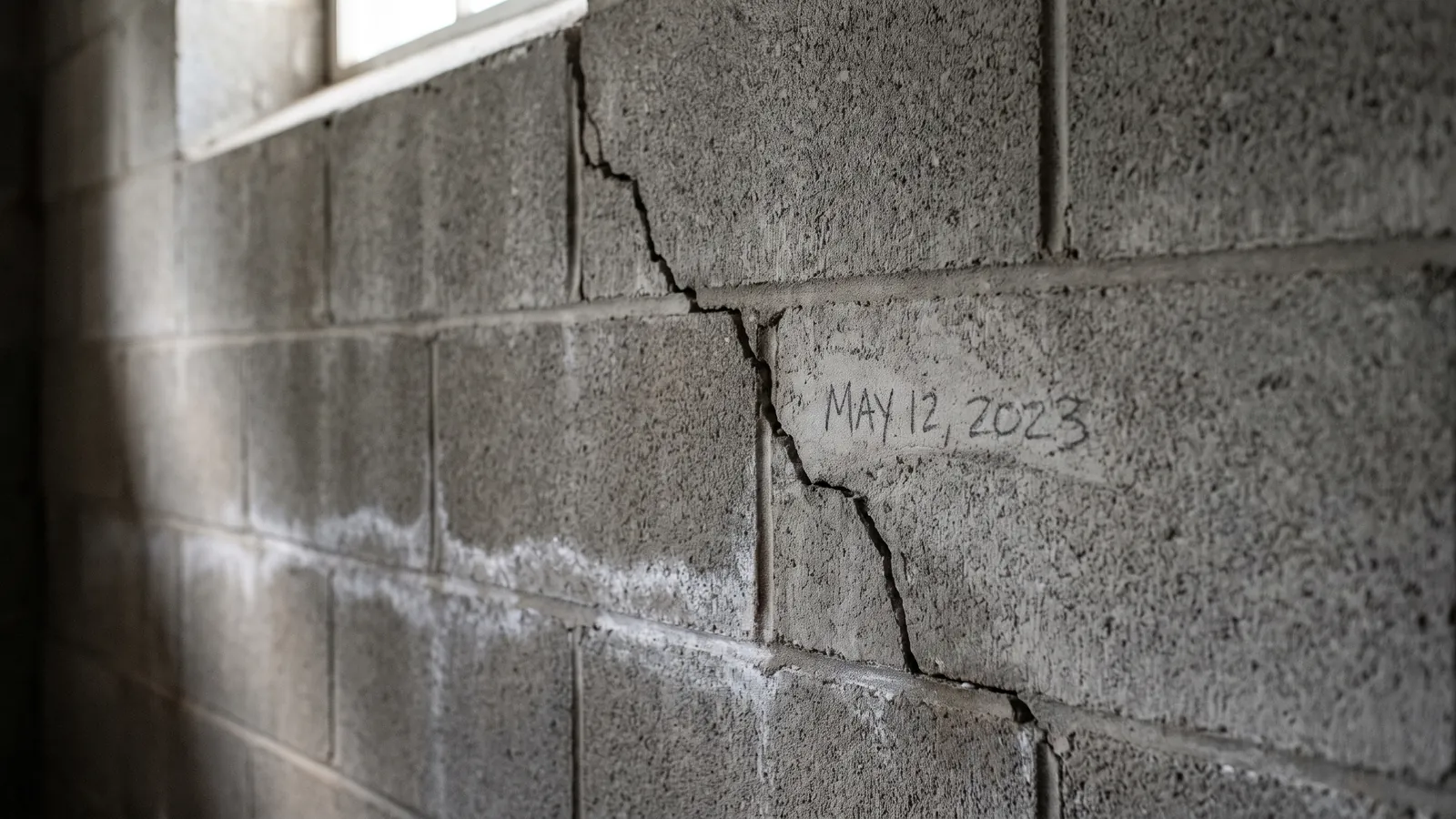
The red and brown clay that covers much of Warren County formed as the limestone weathered. It is the residue left behind when rock dissolves, and it behaves very differently from sand or gravel. Clay particles soak up water and swell, then give it back and shrink. Footings sitting in it rise and fall a little with every wet and dry spell. Older soil surveys rate many local soils as having severe limitations for homes with basements, and the Kentucky Geological Survey warns that soft residual clay can settle gradually under heavy structures.
The yearly cycle
| Season | What the clay is doing | What you may notice |
|---|---|---|
| Late winter | Freeze and thaw near the surface; saturated after winter rain | Frost heave on steps and walks; damp basements |
| Spring (May is usually wettest) | Swelling and heaviest; pressing hardest on basement walls | Bowing walls, leaks at the wall-floor joint, doors that stick |
| Summer | Drying from the top down; trees pulling water | Gaps opening along the foundation; cracks widening at corners |
| Late summer into fall | Driest and smallest; footings losing contact | Settlement cracks, sloping floors, separating trim |
One cycle is small. Thirty or forty of them, on a house built in or before 1991 like half of Bowling Green's homes, add up to the stair-step cracks and tilted floors we measure every week.
Frost depth and footings
Footings are meant to sit below the depth where the ground freezes, so frost cannot lift them. The 2018 Kentucky Residential Code sheet published by Georgetown and Scott County lists a frost line of 24 inches. Your local building office confirms the figure that applies to your address. Porches, stoops and additions built on shallow footings are the usual places where frost and clay team up to move things.
Water is the lever
Clay only moves when its moisture changes, so the most effective things a homeowner can do are about water:
- Keep gutters clean and running; one overflowing corner can soak the clay under a single footing.
- Extend downspouts well away from the house so roof water does not pour beside the foundation.
- Keep the ground sloping away from the walls; settled backfill often slopes the wrong way after a few years.
- Watch large trees close to the house; their roots dry the clay under footings in summer.
- Avoid heavy watering right against the foundation one week and none the next; steady is better than swings.
When movement becomes a repair
Seasonal hairline cracks that open and close a little are part of living on clay. Movement that only goes one way is different: a crack that grows each year, a floor that keeps dropping at one end, a wall that leans further every spring. That is when supports such as piers, wall braces or crawl space supports make sense, along with the drainage that caused it.
How we track it
At an inspection we record floor elevations and crack widths. If the evidence is unclear, we can mark the cracks and come back after a season to measure again. A measured change is a far better reason to spend money than a worried guess.
Trees, additions and porches
A large tree planted close to the house acts like a pump in summer, pulling moisture from the clay under the nearest footing and making that corner shrink more than the rest. That does not mean cutting every tree; it means keeping an eye on the corner nearest the biggest one and keeping water steady there.
Additions, porches and garages are often built later than the main house, on shallower footings, over backfill that settled for years. The joint between old and new is where clay movement shows first, usually as a crack running up the wall where the two meet or a porch slab that tips away from the door.
Questions readers send us
Can clay movement be stopped completely?
Not the clay itself. What can be stopped is the house following it, either by carrying the load down past the active clay on piers, or by keeping moisture steady with drainage.
Should I water my foundation in a drought?
Steady moisture is better than big swings, but soaking the foundation can cause its own problems. Fix gutters and grading first and ask us before setting up any watering routine.
Is a cracked brick veneer a foundation problem?
Sometimes. Stair-step cracks in brick often follow movement in the footing below, but brick also cracks from its own expansion. Measuring floors and the foundation tells the difference.
Why are my doors only sticking in summer?
Late summer is when clay is driest and smallest, so part of the house can settle slightly and pull frames out of square. If it reverses in spring, it is seasonal; if it gets worse every year, it is worth a look.
Do newer houses avoid this?
Not always. Fast-built lots with poorly compacted fill and short downspouts can show clay movement within a few years.
Keep reading: Warning signs · French drains · Karst guide · Foundation repair